- Watt About It Newsletter
- Posts
- Eighteen Hundred Energy Nerds Walk Into a Room
Eighteen Hundred Energy Nerds Walk Into a Room
A power surge off of the grid and a discussion on the Deploy24 Conference.
James Richards
December 10, 2024
Welcome back friends.
This past week I was in DC for the Deploy24 conference which felt like a Tech Crunch Disrupt meets NYC Climateweek type event. All the topics were based around commercializing and deploying new technologies but there was a big undercurrent of uncertainty surrounding what the DOE (and the Loan Program Office specifically) will look like over the next four years. It seems that the “commercialization flywheel” has started spinning and private capital is jumping in, but are they stepping in quickly enough to fill the voids if government programs go away? And are technology companies and project developers doing enough to derisk projects and make them attractive to financiers? There are more questions than answers at this point, I’m afraid.
More on Deploy24 at the end, but now that I’m away from cold DC and back to the sunny Pacific Northwest (wait, what??), let’s jump into the news that I am watching from this week.
When Can We Just Disconnect?
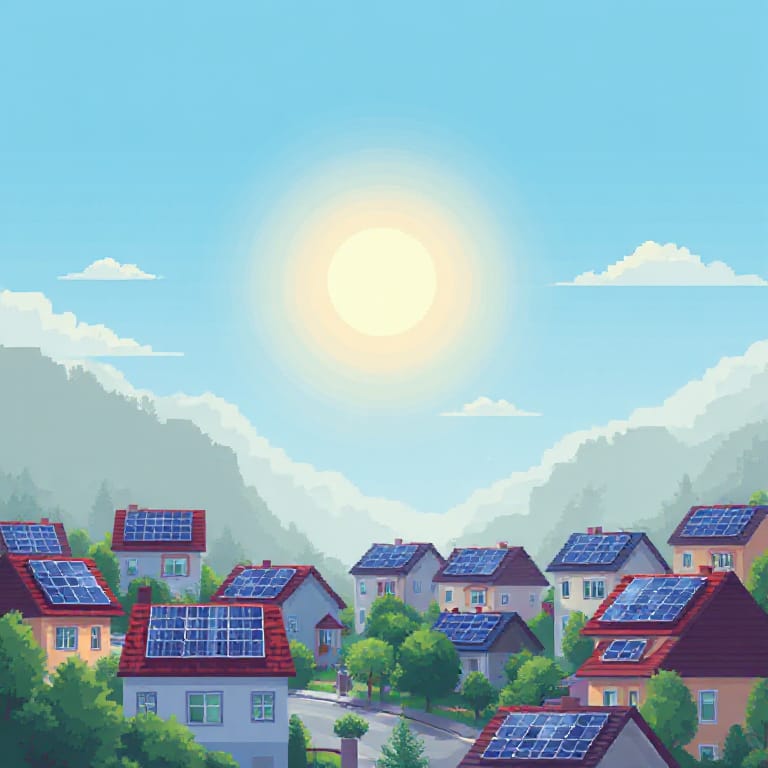
It seems like a big number of young adults have fantasized about saying screw it and going completely off-grid. You watch videos on how to wire solar arrays, build a cabin or grow your own food. Eventually reality sets in and this “careful planning” and Youtube research rabbit hole comes crashing down. Living entirely off-grid is expensive. We’d love to never pay a utility bill again, but the upfront cost hurdle of a cabin with a solar array just isn’t feasible.
My own crazy obsessions aside, why would anyone go off-grid? And what does that mean for the people left on it?
I thought about these questions after seeing this article on the Pakistani distributed solar boom. Electricity in Pakistan is expensive and the country has a relatively small system; less than 4% of U.S. capacity for a country with ~70% of the population of the U.S. This led middle class Pakistanis to import and install off-grid solar at the impressive rate of 25 GW, or half of the country’s peak capacity, in just three years. For reference, the U.S. is projected to have added 42 GW of solar in 2024 to a system that is 25 times larger.
So what drove this big boom in distributed solar? Mostly cost. When you evaluate solar or any other distributed resource against expensive (or volatile) rates, the math starts to work. It would be less risky and easier for a business to justify the large upfront spend. The issue is that these solar panels are still only available to those at least in the middle class. If large scale defections from the grid create oversupply for the customers who are stuck on grid, the working class subsidizes the system costs while the middle and upper classes avoid them. This is not necessarily an issue in the transmission and generating capacity constrained world we live in, but it is a phenomenon that could be problematic with enough large scale defections in a smaller grid like Pakistan.
But we see distributed resources in cheap energy markets, such as the U.S. So why do those customers do it? Independence and cost are factors, especially in residential adoption, but speed is what drives behind-the-meter or off-grid assets for U.S. businesses. Google recently announced a huge initiative to directly connect, and to a certain extent co-locate, renewable energy resources with their data centers. Going 24/7 carbon-free with renewables and batteries may be more expensive now compared to what future techs could provide, and certainly more expensive than natural gas today, but the revenue from a new data center makes the speed worth the extra cost hit. Some companies simply cannot wait for the interconnection process, so they go around it.
So the last question, how do people and businesses going behind-the-meter affect the rest of us? From the commercial side, not a lot, as long as the resources are new. We saw FERC deny an Amazon request to take an existing nuclear plant behind the meter, but if the facility was brand new it might have been a different story. It will get sticky if the facilities are grid connected but also have behind-the-meter assets. A grid connected facility still gets services from the utility or transmission distribution system, such as backup power or occasional procurement when behind-the-meter systems need maintenance. Utilities, regulators, and electricity consumers are all grappling with how to price those usages when behind-the-meter generators are involved. We have seen the residential rooftop solar business compensation models blown up as solar grew. I expect the large energy consumers to be jockeying with grid operators and utilities for some time.
Quick Hits from Deploy24
Turning back to the Deploy24 conference, it was fascinating to be in a room with what felt like 1 metric bajillion people who work in the energy field as policy makers, civil servants, financiers, and technology or project developers. So here are some quick notes I have from the event.
“Missing middle” capital was on the front of everyone’s mind. Unlocking that mythical middle capital that stands between high risk, high return venture funding and low risk infrastructure financing or even private debt will be key. The LPO and other DOE programs have been a great public backstop, but getting private folks off the sidelines is more important now than ever.
Capacity is king right now. Clean firm resources like nuclear, CCS, biomass, and geothermal were the big players in commercialization talks. Coincidentally, these technologies are generally bipartisan and well liked by large off-takers who are driving adoption.
It seems like LPO is absolutely racing to get loans out the door, closing on a several new projects each week. Most notably, Rivian secured a $6.6bn loan
The crowd’s general tone was still bullish on clean energy with what felt like a tinge of defiance at what may or may not be coming. This community is used to being scrappy and now there’s a bit of a chip on their shoulder.
As we wrap up this edition, take a minute and find me on Blue Sky. It seems like more climatetech, finance, and academics folks are joining so I’m having a good time so far. As for the newsletter, we’ll have one more edition this year and then we’re into 2025. If you know where 2024 went, let me know.
-James