- Watt About It Newsletter
- Posts
- Not So Fast, Nuclear.
Not So Fast, Nuclear.
FERC says not so fast to Amazon, we are(n't) doing politics, and some quick hits from the week.

James Richards
November 08, 2024
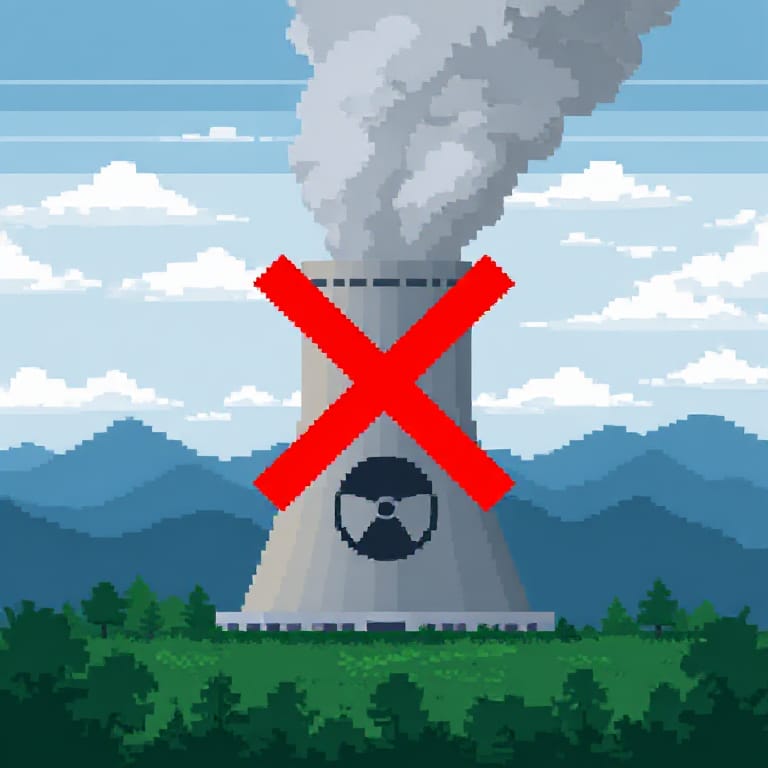
This week was pretty wild with some monumental clean energy news with FERC rulings and project cancelations. And also, there was an election.
FERC Rejects Amazon and Talen’s Nuclear Deal
Nuclear has had win after win lately driven in no small part by data center customers. This week we saw a setback when the Federal Energy Regulatory Commission (FERC) commissioners voted to deny Talen energy’s request that they sell power from their Susquehanna Nuclear Plant directly to Amazon.
Amazon agreed to buy up to 960 MW of behind-the-meter electricity from the Susquehanna Nuclear Plant. This generation already serves the PJM grid.
The argument for rejection was that this would set a precedent that anyone could then just sign behind-the-meter agreements and pull off large amounts of electricity to the detriment of system reliability. FERC’s commissioners assert that PJM did not do enough to prove that this agreement was unique and needed. They said that allowing this would open up behind-the-meter agreements like this to too many parties which could in turn damage system reliability.
It seems like Talen has a few options here. Their current integrated service agreement allows for 300 MW of procurement, which will allow a portion of the data center agreement to move forward. Beyond that, they could try to reapply or appeal and make the argument that this is a novel and first of a kind project and therefore should receive special consideration. They could also follow the Microsoft model and try to develop a front-of-the-meter agreement with Amazon. This is a hot issue, so now others, like Google, are interested and are pressing FERC for regulatory consistency.
These types of bumps will certainly happen as these hyperscalers grapple with how to feed their power needs. We’ve seen a couple different flavors come through as Microsoft, Amazon, and Google have all brought about different approaches. We have learned that behind-the-meter faces an uphill battle. We have also learned from Meta that you can’t mess with bees.
Well, an Election Just Happened
I know, I know, making you read about FERC rulings before I get to this stuff is annoying. But I’m only writing briefly about the election because I want to actually gather my thoughts and intel. There are a lot of knee-jerk reactions out there right now that could be accurate or could be wildly off. Instead of giving you the doom from an energy and climate tech perspective, here are the things I am watching.
How much of the IRA remains and how much goes? In August, over a dozen republican house members signed on to say that a total repeal of the IRA would be a bad idea. With the magnitude of republicans win the IRA will certainly be pared down but it may be unlikely to go away altogether.
How do the more “bipartisan” technologies, like nuclear and geothermal, fare? Most clean firm technologies are fairly bipartisan, but they are still rather new and often times in need of development funds or special derisking money from the government. Some are far enough along, and some are receiving substantial private investment, but cutting something like the DOE Loan Programs Office could hamper others.
Does natural gas become the economic AND lowest barrier to entry technology? It is still difficult to build gas with pipeline siting issues and volatility in the market. There will undoubtedly be more oil and gas permitting by the incoming administration. Does a flood of cheap gas to the market stymie momentum on clean technology deployment?
Do the major companies continue their push? Google uses more electricity than 100 countries. If there is less of a push towards clean energy from the government do these major users continue to invest in carbon mitigation and clean energy technologies? Personally I think they will, but we’ll see what happens if natural gas permitting changes and it all of a sudden becomes a quick fix to the datacenter power crunch.
How does the climatetech investment community adjust? The presidency usually has less to do with this than you would think, but climatetech investing has been recovering well from a brutal 2022. Does the election dampen that trend?
Check This Stuff Out
On the state level, Washington voted to keep a carbon tax policy. A “cap and invest” program has put a price on carbon and reinvested the majority of those funds into climate initiatives or consumer rebates. While Washington state is very liberal on the whole, it is interesting that a carbon tax policy was upheld (and popular) among voters despite some evidence that it raised prices for average consumers.
Last week I wrote about hydrogen projects being imperiled. This week we saw BP cancel 18 hydrogen initiatives and projects.
If you’re interested in climate tech business models and costing, I have a nerdy podcast for your listening pleasure: Catalyst discussion on techno-economic analysis (TEA). Every startup operator and technology developer should be doing some TEA to understand where they stand in the market. As you may have figured from this newsletter, the nuances in electricity and energy spaces can be difficult to grapple with and should be thought about early.
This week has been a wild one for sure. It seems like the clean energy sector is in for some monumental shifts in 2025. If you have found this newsletter helpful, share it with your colleagues. We’ll be looking keeping you updated on the clean energy landscape all throughout the coming year.
-James