- Watt About It Newsletter
- Posts
- Carbon Capture Gets Squeezed
Carbon Capture Gets Squeezed
CCS takes a hit, Form Energy charts a path, and the UN would like everyone to wake up please.
James Richards
October 25, 2024

Welcome back to the Watt About It Newsletter, your source for climate tech insights! The response to the first issue was incredible, so a big thank you goes out to our growing community of climate innovators, energy wonks, and sustainability seekers.
For our first-time readers: we're all about connecting the dots in climate tech, energy transition, and climate business. Think of us as your weekly rapid-fire strategy session on the developments that actually matter.
Let’s get to it.
Carbon Not Captured
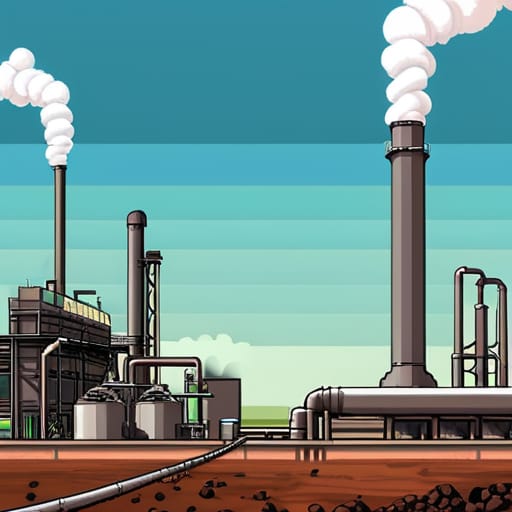
Last week I talked about nuclear being a winner of the so called AI boom. In contrast, it seems that carbon capture is a loser.
Project Bison, a Wyoming direct air capture (DAC) project by CarbonCapture Inc, was shuttered this week. The company cited their inability to procure enough electricity to power the system. Neither new renewables nor grid connection are feasible in a short enough time frame and at the planned site.
Sucking carbon directly out of the air via DAC requires a huge amount of electricity. Hundreds of megawatts are needed and developers prefer this energy in the form of new, carbon free energy. Procuring hundreds of MWs of renewables is difficult and other technologies like advanced nuclear or enhanced geothermal are likely to be early 2030s technology. It also doesn’t make much sense to run DAC systems on a grid that is at least partially powered by fossil fuels.
When there is a finite amount of renewables, or a requirement for investment to get next-gen clean energy off the ground, it seems that the big companies are gobbling everything up before DAC even gets a chance. The players in the data center space, for example, are trillion dollar companies with loads that are easy to site going up against (mostly) startup carbon capture companies with first of a kind technology that don’t have a proven, scalable market for their product. A carbon capture project is riskier in every way, so it’s no wonder they’re getting left out when trying to get electricity.
Personally, I am a fan of carbon capture and I think it has a place in the decarbonized world. But its very hard to be bullish on direct air capture when there is explosive load growth without new clean energy generator deployment keeping pace.
Form Energy is Crossing the Valley

Every clean energy company that approaches real projects comes up against the dreaded “valley of death.” It's a chasm between early-stage risk and the promised land of product maturity. Getting to the other side takes cheap money, intelligent manufacturing practices and firm off-takers. The problem is that all those partners and players are all too happy to sit on the sidelines and avoid the risks of early movers.
Enter Form Energy. The iron-air storage battery developer announced a Series F fund raise of $405M which included some heavy hitters like GE-Vernova and Energy Impact Partners. That absolute war chest of funds sets up their planned demonstrations, factory expansion and early projects quite nicely. This is potentially one of the last steps that they’ll take in crossing the valley of death.
How did they get to the point where they are able to raise such a large and late series of venture/strategic money? Surely the return wouldn’t be worth it for an investor to put in tens or hundreds of millions this late in the game? The return will likely be a lower percentage than what venture capitalists are used to, sure. But the Series F round is a signal that investors don’t see as much risk as there once was. A lower return might not be a huge issue if you have a greater chance of getting your money out.
Let’s take a look at a few steps they’ve taken to get this far across.
13 gigawatt-hours of storage projects under contract. Multiple projects all across the U.S.
Substantial grant money for many of these early projects
Efficient use of previous rounds in deploying
Anchor investors, like Energy Impact Partners, that continue to invest round after round. All earlier round investors came back for the Series F
Strategic relationship with a major strategic player (GE-Vernova)
Significant progress on manufacturing facilities as the funding rounds progressed
A demonstration that is currently under construction
Off-take agreements, diversifying the capital stack, and ramping up production all led them to $1.5B in total investments. If I am a climate tech entrepreneur, I’m studying Form’s playbook.
The UN Would Like Everyone to Work Faster, Please
As a parting shot, check out this report from the UN on the pace of the climate transition. The authors estimate that we’re on track for 2.6-3.1°C of warming with our current global climate policies. Yikes. If we have projects that don’t move forward in the development phase now then it will be difficult in the future. But, as Form’s playbook shows us, it feels like the climate machine is spinning up. There are exponential gains to be made in the 2030s, so governments, capital markets, operators and technologists all have a role to play now. Giddy up.
Well, that’s the newsletter this week. Let me know your thoughts. Share us with your colleagues if you found something here you liked. Also, if you’re on Gmail, move us over from your promotion tab to the main inbox. It helps get us in better favor with the email gremlins.
-James