- Watt About It Newsletter
- Posts
- Nuclear is So Hot Right Now
Nuclear is So Hot Right Now
Big tech goes critical, so called white hydrogen, and things I'm watching in Climatetech

James Richards
October 18, 2024

Welcome to the first issue of the Watt About It Newsletter where we review what is going on in climate tech, energy transition, and climate business. Rather than just compiling what is happening, we give you unique weekly insights on what the developments mean for the broader climate tech ecosystem and what we can learn from these happenings.
So if you’re an entrepreneur, engineer, or just general climate enthusiast then buckle up. This world is moving fast.
Nuclear Is Having a Moment
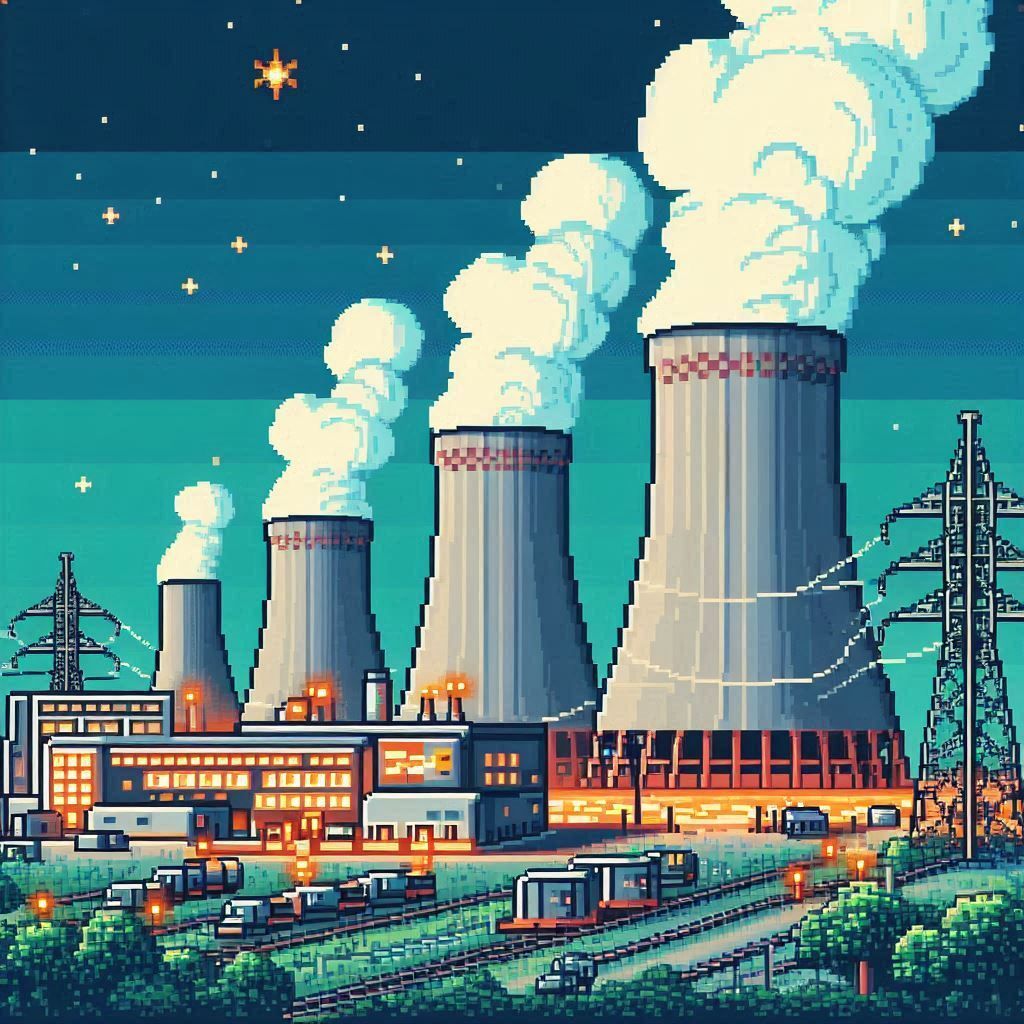
Early 2024 was more of the same for the nuclear industry; a non-binding MOU here, a feasibility study agreement there. In the latter half of the year things have exploded, with some real coups for the nuclear industry.
Hot on the heels of Microsoft’s announcement that they would invest in bringing back the Three Mile Island nuclear plant, Google dropped the revelation that they will be procuring 500 MW of advanced nuclear from Kairos Power. Not to be outdone, Amazon announces they have reached an agreement for investment in X-Energy and development of nuclear projects in Eastern Washington with local utility Energy Northwest. But these reactors are all set to come online in the early 2030s. So why is any of this different than the more fluffy announcements we’ve seen time and time again?
Amazon is not only signing on to X-Energy’s orderbook, but they are also investing $500 million into the company via the climate pledge fund. Amazon has done this before, most notably with Rivian when they took a $700 million stake in the company. The money helped Rivian stand up manufacturing and get to market. Amazon essentially bought the rights to early Rivian production capacity and ensured that they could work out the kinks in their manufacturing process.
Look for that from Amazon here. In addition to their Energy Northwest deal, Amazon is also exploring deployment of 300 MW of reactors at a Dominion Energy Site in Virginia. If the Energy Northwest project moves smoothly, I would expect X-energy’s name to be associated with Dominion as well.
Google’s work with Kairos also mirrors a previous climate strategy; their work with Fervo Energy. Google acted as a firm order for the geothermal startup which allowed them to put up a first of a kind pilot project and attract other firm off-take orders from their first full scale facility. Kairos is licensing and set to build a smaller, zero-power nuclear demo unit which is analogous to Fervo’s pilot scale demo. With a strong demonstration and Google onboard as 500 MW of early off-take, Kairos power just got a hell of a lot less risky.
The big, strategics are getting into it folks. Having 300-500MW of off take from a financially stable company like Amazon or Google signals that there is weight behind the project. Utilities, supply chain or engineering firms, and other investors may perceive the play as less risky.
These two are the biggest pieces of news lately, but they only scratch the surface of the current nuclear landscape. For maybe the first time since the 1960s, it’s hard to keep up.
What the Heck is White Hydrogen

There are way too many hydrogen colors. I feel like we jumped the shark after green and grey. But putting my own naming convention consternation aside, white hydrogen, or natural geologically occurring hydrogen, got a big boost this week when Koloma announced a $50m Series B extension round investment from Mitsubishi.
Hydrogen has seen a whole lot of hype, but when you get down to all in cost, it is fighting an uphill battle. The inefficiency of production and expense in storage, transportation, and delivery have led to some high profile project delays or cancelations. So what if we could just suck hydrogen from the ground and use it as a feedstock or an energy source? That’s what Koloma is trying to do.
White hydrogen isn’t without its risks though. There are very few known, naturally occurring hydrogen reservoirs, so exploration will be a huge part of any extraction company’s expense. White hydrogen is also less pure and would need some refinement for use in fuel cells or as a feedstock to industrial chemical production. I’m not the most bullish on geological hydrogen, but it has an intriguing proposition.
Check This Stuff Out
The US Loan Programs Office (LPO) announced two project loans for sustainable aviation fuel projects, totaling $3bn. People often wonder why there is such a focus on decarbonizing aviation even though it is only ~3% of emissions in the US. A few successful projects could really punch above their weight in producing carbon negative/neutral liquid fuels. We’ll always need liquid fuels in some form or another, so I’m watching SAF as an early mover in that space.
DOE announces $900m for small modular reactor deployment. Wait, there’s more nuclear news??
Form Energy is set to build largest long duration storage battery project in the world. Form’s technology can store energy for up to 100hrs, long enough to shift from lower load days (weekends) to higher load days (weekdays).
Well, you made it to the end. We’re just starting to build our community, so reach out! I want to hear about what you liked and what you want to see. Reply to this email or find me on linkedin. We’ll be putting out a weekly newsletter, and I hope to be doing deeper dives into specific technologies in the future, so subscribe to get details on those upcoming posts.
-James